Ever wonder how your phone got so fast and intuitive? It's not magic, it's on-device AI. Let's explore why having a brain in your pocket is better than the cloud.
Let's have a real talk about our phones. For years, the big story in tech was all about "the cloud." It felt like every new feature, every smart assistant, and every cool photo filter worked by sending our data to some massive, far-off server. The cloud was the brain, and our phones were just the messengers. But lately, there's been a quiet but powerful revolution happening right in our hands. The brain is coming home.
This shift is all about on-device Artificial Intelligence. Instead of outsourcing the thinking, our smartphones are now powerful enough to do the heavy lifting themselves, thanks to specialized hardware like Neural Processing Units (NPUs). Honestly, I didn't think much of it until I started noticing the small things. My camera app identifying a dog breed in real-time, my keyboard predicting my next three words with spooky accuracy, or a language translation app working flawlessly on the subway with zero signal.
It’s a subtle change, but it’s profound. Our phones are becoming less like windows to the internet and more like intelligent companions that understand our world and our habits. This isn't just about adding flashy features; it's about making our technology faster, more private, and genuinely more personal. So, let's get into what this really means for you and that little supercomputer in your pocket.
The End of Lag: Speed You Can Feel
The most immediate and satisfying benefit of on-device AI is the sheer, unadulterated speed. We've all been there—you're trying to capture a perfect moment, but you're stuck waiting for the camera's portrait mode to process the background blur. Or you ask your voice assistant a simple question and are met with that dreaded "thinking" animation. That delay, known as latency, happens because your phone has to package up your request, send it to a server, wait for an answer, and then display the result.
On-device AI cuts out the middleman. When the processing happens locally, the response is virtually instantaneous. I was recently editing a video on my phone, applying some AI-powered stabilization, and the preview was perfectly smooth in real-time. A few years ago, that kind of task would have required a powerful laptop and a significant amount of waiting. Now, it happens in the blink of an eye, all because the phone's NPU is designed for exactly these kinds of workloads.
This isn't just a convenience; it fundamentally changes how we interact with our devices. It makes technology feel less like a machine we're operating and more like an extension of our own thoughts. Whether it's live transcription during a meeting or augmented reality objects appearing seamlessly in your room, the lack of lag creates a more immersive and fluid experience. It’s a quiet upgrade that you feel more than you see.
A Fortress for Your Data: Privacy by Default
In a world where our digital privacy feels increasingly fragile, on-device AI is a massive step in the right direction. Think about all the sensitive information your phone handles: your photos, your private messages, your health data, your location history. For years, much of this data had to be sent to the cloud for AI features to work. Honestly, the thought of my personal photo library being analyzed on a remote server always made me a little uneasy.
Processing this data locally changes the entire security equation. When your phone can identify faces to sort your photo albums, recognize your voice to handle commands, or track your sleep patterns without that data ever leaving your device, your privacy is inherently protected. It’s like having a conversation in the privacy of your own home versus shouting it across a crowded room. The risk of your data being intercepted or misused during transmission to the cloud simply vanishes.
This is a core principle behind features like Apple's Face ID or Google's Now Playing song recognition on Pixel devices. The biometric map of your face or the acoustic fingerprint of the music around you is analyzed and stored securely on your phone. It’s a powerful promise: you get all the benefits of intelligent features without having to trade away your personal information. It builds a foundation of trust that is absolutely essential as AI becomes more integrated into our lives.
Unplugged Intelligence: AI That Goes Where You Go
One of the most underrated advantages of on-device AI is its ability to work without an internet connection. We've become so accustomed to being constantly connected that we often forget how frustrating it is when our "smart" devices become dumb the moment we lose signal. Whether you're on a flight, hiking in a national park, or just in a building with spotty Wi-Fi, cloud-dependent AI is useless.
On-device AI, however, is always on, always ready. I was traveling abroad recently and found myself trying to decipher a menu in a small, family-run restaurant with no public Wi-Fi. Using my phone's camera, I got an instant translation, allowing me to order with confidence. That moment wouldn't have been possible if my phone needed to connect to a server. The AI model for translation was running right there, on my device.
This offline capability makes our phones dramatically more reliable. It means your keyboard's predictive text still works, your camera's scene detection still optimizes your photos, and your voice assistant can still handle basic commands like setting timers or opening apps, no matter where you are. It transforms the smartphone from a device that's dependent on a network into a self-sufficient tool that you can truly count on, anytime, anywhere. It’s a liberating feeling, knowing the intelligence you rely on is always with you.
As this technology continues to mature, the line between the digital and physical worlds will only become more blurred, in the best way possible. Our phones are evolving into partners that don't just respond to our commands but anticipate our needs, all while keeping our personal lives private. It’s a quiet and personal tech revolution, and it’s happening right in the palm of your hand.
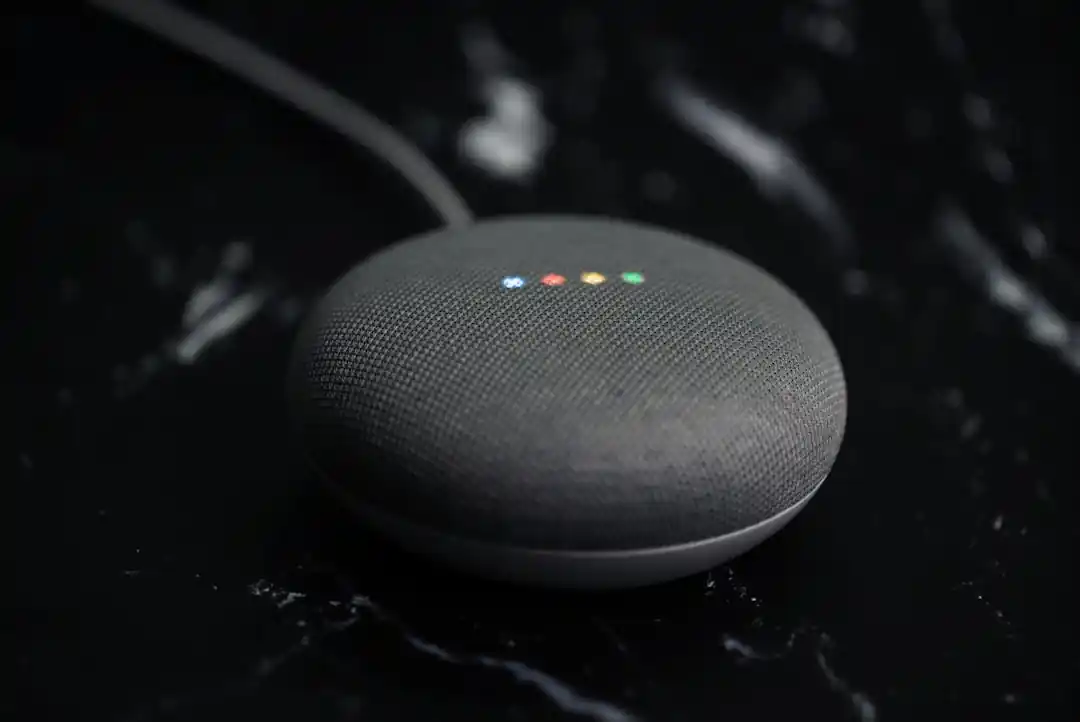
Your Smart Home is Listening: A Guide to Protecting Your Privacy
The Complete Guide to Renting a Scooter in Goa for Tourists

Related Posts
 MOBILE
The Great Console Debate: How to Choose the Right Gaming System for Your Family
Feeling stuck between a Switch, a PlayStation, and an Xbox? Let's break down which gaming console is the perfect fit for your family's game nights.
 MOBILE
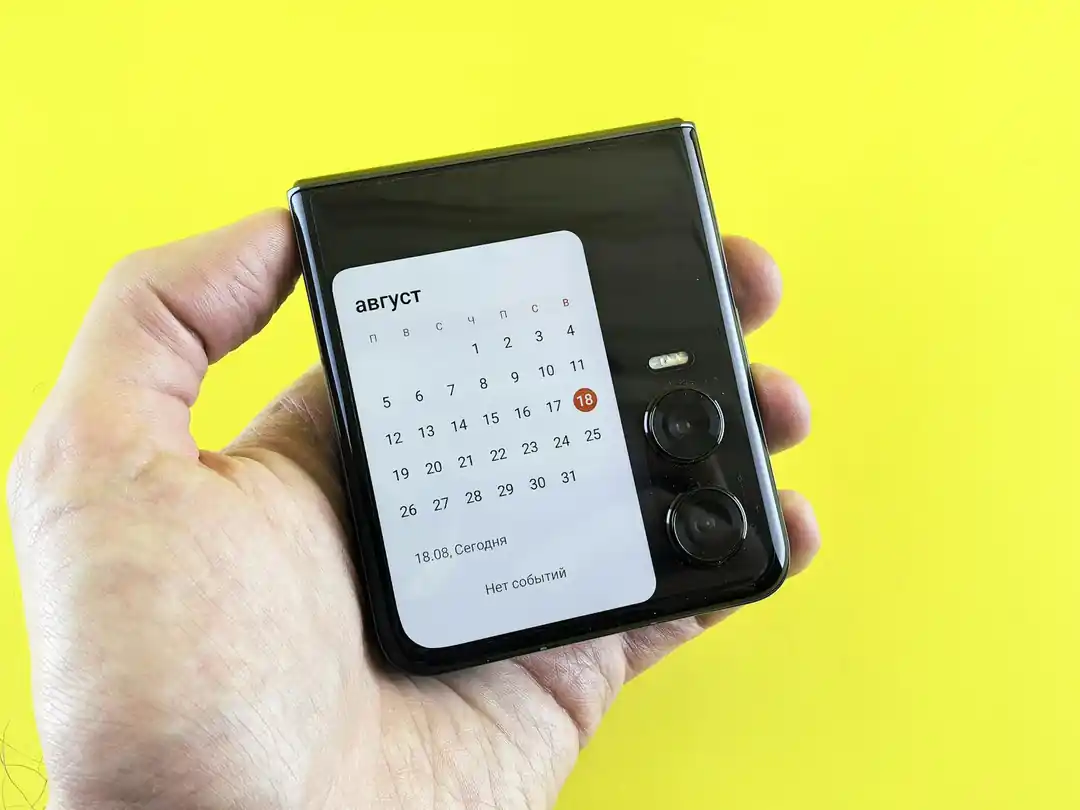
From Fragile to Formidable: The Surprising Evolution of Foldable Phone Durability
Remember when the idea of folding a smartphone screen in half felt like a disaster waiting to happen? Let's talk about how far they've come, because the story is pretty incredible.

Popular Posts

Rethinking Non-Profit Promotion: Creative Strategies That Actually Drive Event Impact

Beyond Stark White: The Best Interior Paint Colors to Light Up Your New Space

How to Actually Master a New Language on Your Own (No Magic Gene Required)
