Ever feel like you have a song in your heart but can't find the words? Let's break down the art of lyric writing, turning abstract feelings into unforgettable stories.
There's a certain kind of alchemy in a song that just gets you, isn't there? Those lyrics that feel like they were pulled directly from your own mind, painting a scene so clearly you can almost smell the coffee or feel the chill of a lonely night. For the longest time, I was convinced this was some kind of mystical gift, a lightning-in-a-bottle moment reserved for the chosen few. But honestly, after years of filling notebooks with terrible, clunky lines (and a few good ones), I've learned that writing compelling lyrics is less about divine intervention and more about mastering a craft. It’s about learning to be a keen observer of the world and, most importantly, of your own heart.
It’s a journey that can feel incredibly vulnerable. You’re essentially taking the messy, chaotic, beautiful stuff from your inner world and putting it on display. But the reward—connecting with someone on a deeply human level through your words—is worth every second of doubt. We aren't just stringing words together; we're building tiny worlds for listeners to step into for three minutes at a time. So, let's get into it. Let's talk about how to move from a daunting blank page to lyrics that resonate and endure.
Show, Don't Tell: The Golden Rule of Storytelling
This is probably the single most important piece of advice in any form of creative writing, and it's the absolute bedrock of great lyricism. "Show, don't tell" is the practice of describing a scene or feeling through actions, sensory details, and tangible images rather than just stating it outright. It’s the difference between saying "I was heartbroken" and painting a picture of it: "My favorite coffee mug slipped right through my hands / And I just stared at the pieces, too tired to understand." See the difference? One tells you the emotion, the other lets you feel the numbness and shock.
To get good at this, you have to become a sensory detective. When you're thinking of a moment you want to write about, close your eyes and put yourself there. What do you see? Is it the way the dust motes dance in a sunbeam? The crack in the pavement? What do you hear? The distant wail of a siren, the hum of a refrigerator? What do you smell, taste, or feel on your skin? The metallic tang of rain in the air, the scratchy wool of an old sweater?
Weaving these specific sensory details into your lyrics is what makes them come alive. It invites the listener to step out of their own world and directly into the one you've created. You're not just telling them a story; you're giving them the building blocks to experience it for themselves. It’s a generous act, and it’s what makes a song feel personal and profound.
The Power of Specificity and Universal Truth
Following right behind "show, don't tell" is the crucial role of specificity. Vague lyrics are forgettable. It's the concrete, specific details that anchor a song in reality and, paradoxically, make it more universally relatable. Think of Taylor Swift’s "All Too Well" and the infamous scarf left at a sister's house. Not everyone has that exact experience, but we all understand the feeling of a small, tangible object holding the weight of a whole relationship. That's the magic of a specific detail.
Instead of writing "we drove around," try "we traced the county lines in your beat-up Chevrolet." Instead of "I miss you," try "I still make a whole pot of coffee, then remember you're not there to share it." These details provide a foothold for the listener's imagination. They create a sense of authenticity and make the story feel real, lived-in, and true. It’s these little truths that allow a listener to see their own life reflected in your song.
The goal is to find the universal emotion within your specific experience. Your heart might be breaking because your dog is getting old, and you write a line about the gray fur around his muzzle. A listener might hear that and think of their own aging parent or a fading friendship. The specific detail (the gray fur) is the key that unlocks the universal emotion (the bittersweet pain of watching something you love change and fade). Don't be afraid to get personal and specific; it's where the real connection lies.
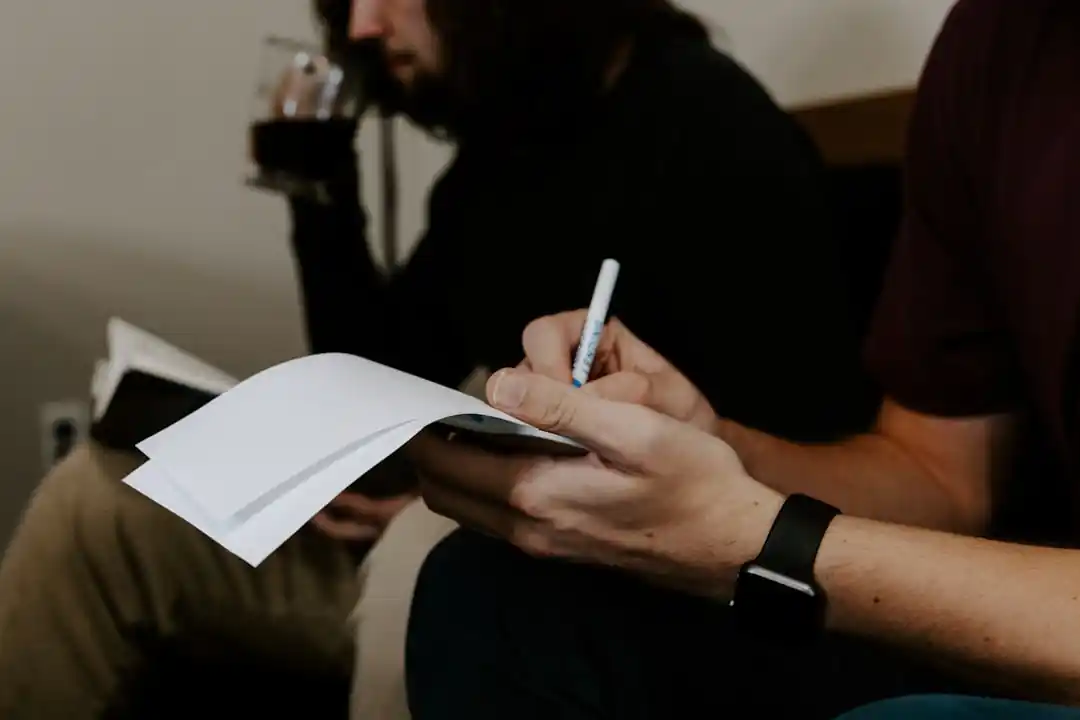
Mastering Metaphor and Simile
Once you have your story and your details, it's time to elevate them with figurative language. Metaphors and similes are the songwriter's power tools. They allow you to express complex emotions and abstract ideas in ways that are fresh, surprising, and deeply resonant. A simile compares two things using "like" or "as" ("her laugh was like a wind chime"), while a metaphor makes a more direct comparison ("her laugh was a wind chime").
These devices create powerful mental images and add layers of meaning. Saying "I feel trapped" is fine. But saying "These days I'm just a ghost in my own house" is devastating. It conveys not just the feeling of being trapped, but also invisibility, loneliness, and a sense of being disconnected from your own life. A good metaphor can do the work of an entire verse.
Don't just reach for the first comparison that comes to mind. Push yourself to find unique and unexpected connections. A great exercise is to take an emotion—like 'joy' or 'regret'—and brainstorm ten different things it could be. Is regret a bitter taste? A heavy coat? A stubborn stain? Playing with these ideas will strengthen your creative muscles and lead you to lyrics that are not only beautiful but also intellectually and emotionally stimulating for the listener.
The Music of Words: Rhyme and Rhythm
Lyrics don't exist in a vacuum; they are meant to be sung. The sound and rhythm of your words are just as important as their meaning. This is where rhyme and meter come into play. A good rhyme scheme can make your lyrics feel satisfying and memorable, creating a sense of order and musicality. However, the cardinal sin of lyric writing is forcing a rhyme. We've all heard it—that awkward, clunky line that clearly only exists to rhyme with the line before it.
The best rhymes feel effortless and natural. They should serve the story, not the other way around. If you're stuck, don't be afraid to use near rhymes (or slant rhymes), like rhyming "shape" with "late." It can sound more modern and less sing-songy than perfect rhymes. Also, play with internal rhymes—rhyming words within the same line or adjacent lines—to create a more complex and interesting texture.
Pay attention to the rhythm and flow of your phrases. Read your lyrics out loud. Do they have a natural cadence? Do they stumble off the tongue? The number of syllables in a line and where the stresses fall (the meter) will dramatically affect how the lyric sits with a melody. You don't need to be a poetry scholar, but developing an intuitive feel for the music in your language will make your lyrics infinitely more singable and powerful. Your words should dance, even before the music starts.

Chasing Awe: A Journey Through America's Most Stunning National Parks
Your First Day on Skis: A Beginner's Guide to Finding Your Feet

Related Posts
 HOBBIES
The Beginner's Guide to Reading the Night Sky: How to Spot Your First Constellations
A friendly, grounded guide to navigating the night sky, understanding stellar movements, and spotting iconic constellations without expensive gear.
 PETS
PETSSniffle-Free Snuggles: America's Most-Loved Hypoallergenic Dogs
Dreaming of a furry friend but dreading the sneezes? You're not alone. Let's dive into the wonderful world of popular hypoallergenic dog breeds in the US.

Popular Posts

Rethinking Non-Profit Promotion: Creative Strategies That Actually Drive Event Impact

Beyond Stark White: The Best Interior Paint Colors to Light Up Your New Space

How to Actually Master a New Language on Your Own (No Magic Gene Required)
