The Digital Detectives: How AI Is Learning to Spot AI-Generated Content
Ever wonder if you're reading something written by a human or a machine? Let's pull back the curtain on AI content detectors and the fascinating science of perplexity and burstiness.
It’s a strange new world, isn't it? We're swimming in a sea of information, and increasingly, it's hard to tell who—or what—is behind the words we read. With the explosion of powerful AI language models like GPT-4, the line between human and machine-generated text has become incredibly blurry. It’s a reality that has given rise to a new kind of digital detective: the AI content detector.
You’ve probably seen them. Tools that promise to analyze a piece of text and give you a percentage score of how likely it is to be AI-generated. For educators, editors, and anyone concerned with authenticity, they seem like a magic bullet. But how do they actually work? It’s not magic, but it is a fascinating blend of linguistics and statistics.
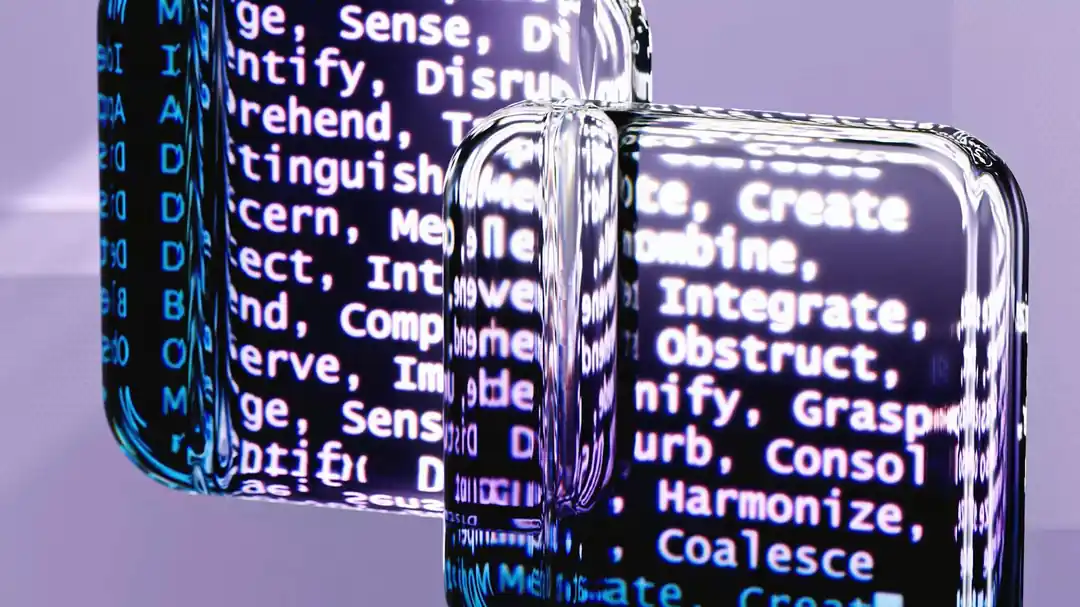
The core idea is that humans and AI "think" about language differently. We are messy, creative, and unpredictable. AI, for all its power, is a creature of patterns and probabilities. AI content detectors are trained on vast datasets of both human and AI writing to learn these subtle differences. They aren't looking for a single tell-tale sign, but rather a collection of signals that, when combined, point towards a machine's handiwork. It’s a game of statistical cat and mouse, and the two most important concepts to understand are perplexity and burstiness.
The Predictability Problem: Understanding Perplexity
Have you ever finished someone's sentence? Or had a word pop into your head that just felt right? That's human intuition at work. AI language models do something similar, but on a much more mathematical level. They work by predicting the next most likely word in a sequence. An AI trained on the entire internet has a pretty good idea that after "the cat sat on the...", the word "mat" is a very probable next choice.
This is where perplexity comes in. In simple terms, perplexity is a measure of how surprised a language model is by a piece of text. If the text is very predictable and uses common word combinations (like "the cat sat on the mat"), the perplexity score will be low. The model isn't "perplexed" at all; it saw it coming.
Human writing, however, tends to have a higher perplexity. We use unusual metaphors, break grammar rules for stylistic effect, and jump between simple and complex sentences. Our word choices are influenced by emotion, memory, and a lifetime of unique experiences—factors an AI can only simulate. When an AI detector sees text with consistently low perplexity, it's a red flag. It suggests the text was constructed by an engine that favors the most probable path, rather than the most creative one.
The Rhythm of Writing: It's All About Burstiness
Now, let's talk about rhythm. Think about how you write. You might write a few short, punchy sentences, then a long, complex one full of clauses and commas. Your sentence structure varies. This variation is called burstiness. Human writing is naturally "bursty." We have peaks and valleys in sentence length and complexity.
AI models, especially older or less sophisticated ones, often struggle with this. They tend to produce text that is very uniform. Sentences might be of similar length and structure, creating a monotonous, robotic rhythm. This lack of variation results in a low burstiness score.
An AI detector analyzes the structure of the text, looking for these patterns. Is there a natural ebb and flow to the sentence length? Or does it feel like it was assembled on a factory line? Low burstiness is another strong indicator that a machine, not a person, was the author. It’s the literary equivalent of a flat-line EKG—a sign that the creative "heartbeat" of a human writer is missing.
The Unwinnable Race?
So, are AI detectors foolproof? Not by a long shot. The relationship between AI generation and detection is a constant arms race. As AI models become more sophisticated, they get better at mimicking human-like perplexity and burstiness. They are being trained to be more "creative" and less predictable.
Furthermore, these detectors can produce false positives. A human writer who has a very clear, concise, and simple style might be flagged as an AI. Conversely, a person could use an AI to generate a base draft and then edit it heavily, adding their own unique voice and erasing the statistical clues the detector is looking for. Some tools even exist now to "humanize" AI text, specifically designed to defeat these detectors by introducing more perplexity and burstiness.
Ultimately, these tools are not arbiters of truth. They are instruments of probability. They don't know if a text is AI-generated; they make a highly educated guess based on the statistical patterns they were trained to recognize. They are a useful signal, but they should never be the only piece of evidence.
The rise of AI writing and detection is pushing us to think more deeply about what it means to be a writer and a reader. It forces us to look beyond the words on the page and consider the intent, the style, and the subtle, messy, and beautiful imperfections that make us human. And in a world filled with increasingly perfect machines, that's a conversation worth having.
The Tiny Brain in Your Phone: What is an NPU and Why Does It Matter?
The Clean Beauty Decoder: Your Guide to Actually Understanding Ingredients

Related Posts
 MOBILE
The Great Console Debate: How to Choose the Right Gaming System for Your Family
Feeling stuck between a Switch, a PlayStation, and an Xbox? Let's break down which gaming console is the perfect fit for your family's game nights.
 MOBILE
From Fragile to Formidable: The Surprising Evolution of Foldable Phone Durability
Remember when the idea of folding a smartphone screen in half felt like a disaster waiting to happen? Let's talk about how far they've come, because the story is pretty incredible.
Popular Posts

Rethinking Non-Profit Promotion: Creative Strategies That Actually Drive Event Impact

Beyond Stark White: The Best Interior Paint Colors to Light Up Your New Space

How to Actually Master a New Language on Your Own (No Magic Gene Required)
