Feeling buried by your inbox? It’s time to meet your new best friend: the AI email assistant. Let's dive into how they work and why they're a game-changer for productivity.
Let’s be honest for a second. What’s the first thing you do when you open your laptop in the morning? If you’re anything like me, you take a deep breath and click on that little mail icon, bracing yourself for the digital avalanche that awaits. For years, my inbox felt less like a communication tool and more like a never-ending to-do list written by hundreds of other people. I was spending hours just sorting, flagging, and crafting replies. It was, in a word, draining.
I used to think this was just the cost of doing business in a connected world. We’ve tried everything, haven’t we? Folders, filters, complex labeling systems, the “Inbox Zero” dream that always seems to evaporate by 10 AM. But recently, something has fundamentally shifted. The conversation around artificial intelligence has moved from a far-off, futuristic concept to a practical tool that’s landing right in our inboxes. And honestly, it’s changing the game.
AI email assistants are no longer the stuff of sci-fi. They are here, and they are incredibly good at what they do. We're talking about smart, intuitive tools that learn your habits, understand your priorities, and help you communicate more effectively, all while giving you back your most valuable resource: time. This isn't about letting a robot take over your relationships; it's about clearing the clutter so you can focus on the conversations that truly matter.
So, What Are AI Email Assistants, Really?
Before we go any further, let's clear something up. An AI email assistant is so much more than the spam filter you’ve had for years. While a spam filter uses basic rules to catch obviously unwanted mail, an AI assistant is like a brilliant intern who has studied your workflow for months. It uses sophisticated machine learning and natural language processing to understand the content and context of your emails.
Think of it this way: a traditional filter sees an email from an unknown sender with a weird link and flags it. An AI assistant, on the other hand, can read an email from a new client, understand that it contains an urgent request for a proposal, notice that you usually reply to such requests within two hours, and then flag it as a top priority in your inbox. It might even pull up a template you’ve used for similar proposals in the past. See the difference? It’s proactive, not just reactive.
This intelligence is what sets these tools apart. They don't just sort; they analyze. They learn your personal communication style, figuring out if you're a "Hey team" or a "Dear colleagues" kind of person. They recognize patterns in your behavior, like which newsletters you always read and which you delete without opening. Over time, they build a profile of your digital life that allows them to anticipate your needs in a way that feels almost magical, but is really just very, very smart code.
The Superpowers: Key Features Saving Your Sanity
The real magic of AI email assistants lies in their specific features, each designed to tackle a different aspect of inbox overload. It’s not just one thing; it’s a combination of capabilities that work together to create a seamless, efficient experience. These aren't just minor conveniences; they represent a fundamental shift in how we interact with our email.
First up is intelligent drafting and smart replies. We’ve all stared at a blank composition window, trying to find the perfect way to say "Got it, thanks!" without sounding too brief or overly enthusiastic. AI assistants can generate context-aware replies with a single click. More impressively, they can take a few bullet points you’ve jotted down and expand them into a fully-formed, professional email that matches your personal tone. Some tools, like Gemini in Gmail, are getting incredibly good at this, saving countless minutes on routine correspondence.
Then there's summarization. Have you ever been added to a 50-message-long email thread and felt a sense of despair? AI can instantly read that entire conversation and give you the executive summary—key decisions, action items, and outstanding questions. This is an absolute game-changer for anyone who has to jump into projects mid-stream or simply wants to catch up after a day of meetings. It cuts through the noise and delivers pure signal.
Finally, let's talk about prioritization and organization. This is where the AI truly shines as a gatekeeper. Tools like SaneBox have mastered the art of learning what’s important to you. The AI analyzes incoming mail and automatically diverts non-urgent items—newsletters, promotional materials, CC-notifications—into a separate folder (like a "SaneLater" digest) for you to review at your leisure. This keeps your main inbox clean and focused on the messages that require your immediate attention, transforming it from a cluttered mess into a curated list of priorities.
How to Choose Your Digital Sidekick
Diving into the world of AI email assistants can feel a bit overwhelming with all the options out there. The key is to start by identifying your biggest pain point. Are you drowning in newsletters? Is drafting replies eating up your day? Or is scheduling meetings the bane of your existence? Knowing what you want to solve will help you narrow down the choices.
Many of the best tools offer free trials, which I highly recommend using. Spend a week with a tool and see how it integrates into your daily routine. Does it feel intuitive? Is it genuinely saving you time, or is it just another thing to manage? Some popular options in the US market include Shortwave for its clean interface and powerful bundling features, Superhuman for its speed and keyboard-shortcut-driven workflow, and the built-in AI features in Microsoft Copilot and Gemini for Gmail for seamless integration.
Pay close attention to privacy policies. You are giving these tools access to your most sensitive communications, so it's crucial to choose a provider that prioritizes data security. Look for companies that are transparent about how they use your data and whether they use it to train their models. A good AI assistant should work for you, not use you as a training ground.
Don't Lose the Human Touch
With all this talk of automation and AI, there's a valid concern: are we losing the human element of communication? It's an important question. An AI can draft a perfectly polite and efficient email, but it can't replicate genuine empathy, humor, or the nuance of a long-standing professional relationship. The goal of these tools shouldn't be to automate every interaction, but to handle the noise so you have more mental energy for the conversations that require a human touch.
I see my AI assistant as a tool for triage. It handles the logistical back-and-forth, the routine confirmations, and the inbox clutter. This frees me up to spend more time writing a thoughtful, personalized response to a client who is having a tough time, or to hop on a call to brainstorm with a colleague instead of just sending another email.
Ultimately, AI is a powerful lever. It can be used to create distance, or it can be used to create more space for meaningful connection. The choice is ours. By delegating the robotic tasks to the robots, we can reserve our uniquely human skills—creativity, strategic thinking, and emotional intelligence—for where they'll have the greatest impact. And in a world saturated with digital noise, that feels like a pretty significant win.

Tornado Watch vs. Warning: It’s More Than Just Words
Never Lose a Number Again: The Ultimate Guide to Syncing Your Contacts

Related Posts
 MOBILE
The Great Console Debate: How to Choose the Right Gaming System for Your Family
Feeling stuck between a Switch, a PlayStation, and an Xbox? Let's break down which gaming console is the perfect fit for your family's game nights.
 MOBILE
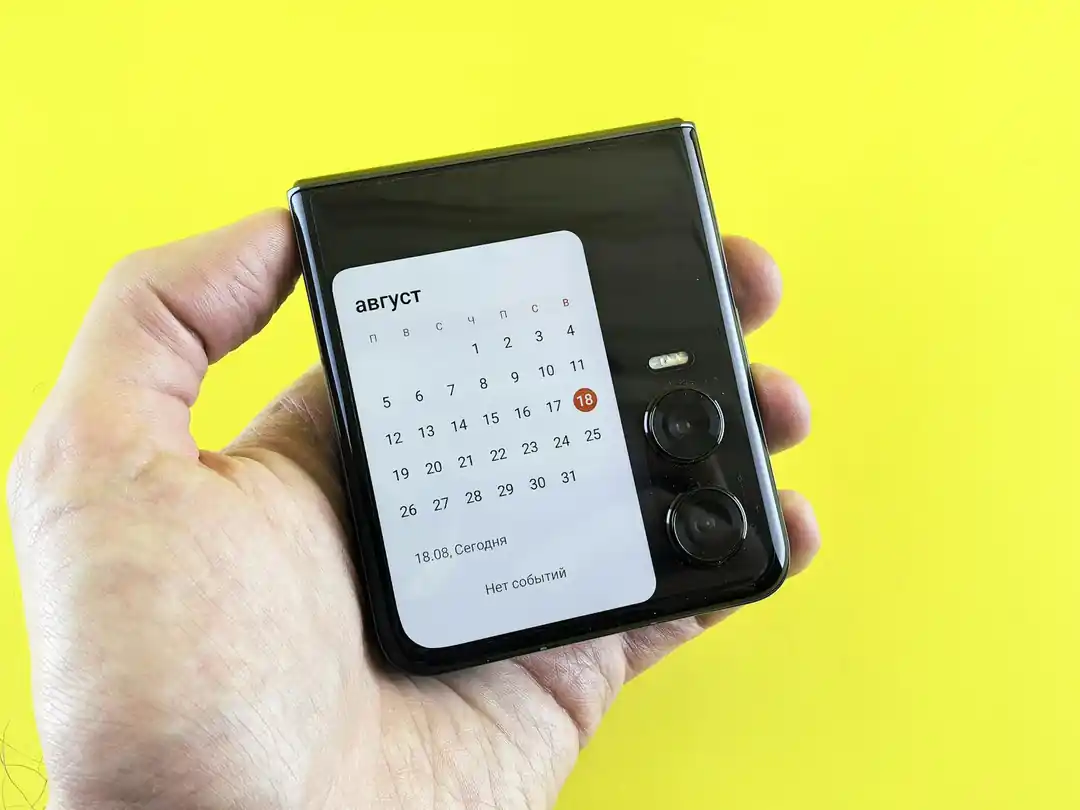
From Fragile to Formidable: The Surprising Evolution of Foldable Phone Durability
Remember when the idea of folding a smartphone screen in half felt like a disaster waiting to happen? Let's talk about how far they've come, because the story is pretty incredible.

Popular Posts

Rethinking Non-Profit Promotion: Creative Strategies That Actually Drive Event Impact

Beyond Stark White: The Best Interior Paint Colors to Light Up Your New Space

How to Actually Master a New Language on Your Own (No Magic Gene Required)
