Forecasting Fire: How AI is Becoming Our Early Warning System for Space Weather
The sun's volatile nature poses a real threat to our tech-heavy world. Discover the groundbreaking AI tools that are learning to predict solar flares and protect our future.
Honestly, how often do you think about the weather in space? If you're like most people, probably not very often. We’re used to checking our local forecast for rain or sun, but the idea that there’s weather happening hundreds of thousands of miles away that could knock out our GPS or power grid feels like something out of a science fiction movie. But it’s a very real, and increasingly relevant, part of our modern lives. Our world runs on satellites, intricate power systems, and global communication networks—all of which are surprisingly vulnerable to the sun’s fiery temperament.
For decades, predicting space weather, like solar flares or coronal mass ejections (CMEs), has been an incredibly challenging science. It was a reactive field, where we often only knew about a major event after it had already happened. But that’s beginning to change, and the catalyst for this shift is Artificial Intelligence. Scientists are now harnessing the power of AI to sift through mountains of data and find the subtle clues that predict the sun's next big move, giving us a crucial head start to protect the technology we all depend on.
Why We Urgently Need Better Forecasts
So, what are we really talking about when we say "space weather"? The main culprits are events stemming from the sun's magnetic activity. Solar flares are intense bursts of radiation that can reach Earth in just over eight minutes, potentially disrupting radio communications. CMEs are even more powerful; they are giant clouds of solar plasma and magnetic fields that hurl through space. If a CME hits Earth, it can trigger a geomagnetic storm, which can induce extra currents in our power grids, leading to blackouts. They can also damage satellites, disrupt GPS signals, and pose a radiation risk to astronauts.
The reality is, our vulnerability to these events is higher than ever. Think about how much of your daily life relies on systems that could be affected: navigation apps on your phone, credit card transactions, and even the stability of the electrical grid that powers your home. A major solar storm in today's world could cause trillions of dollars in damage and lead to widespread disruptions that could last for weeks or even months. This isn't just a scientific curiosity; it's a matter of global infrastructure and economic security. That's why the race is on to build a reliable early-warning system, and AI is proving to be the missing piece of the puzzle.
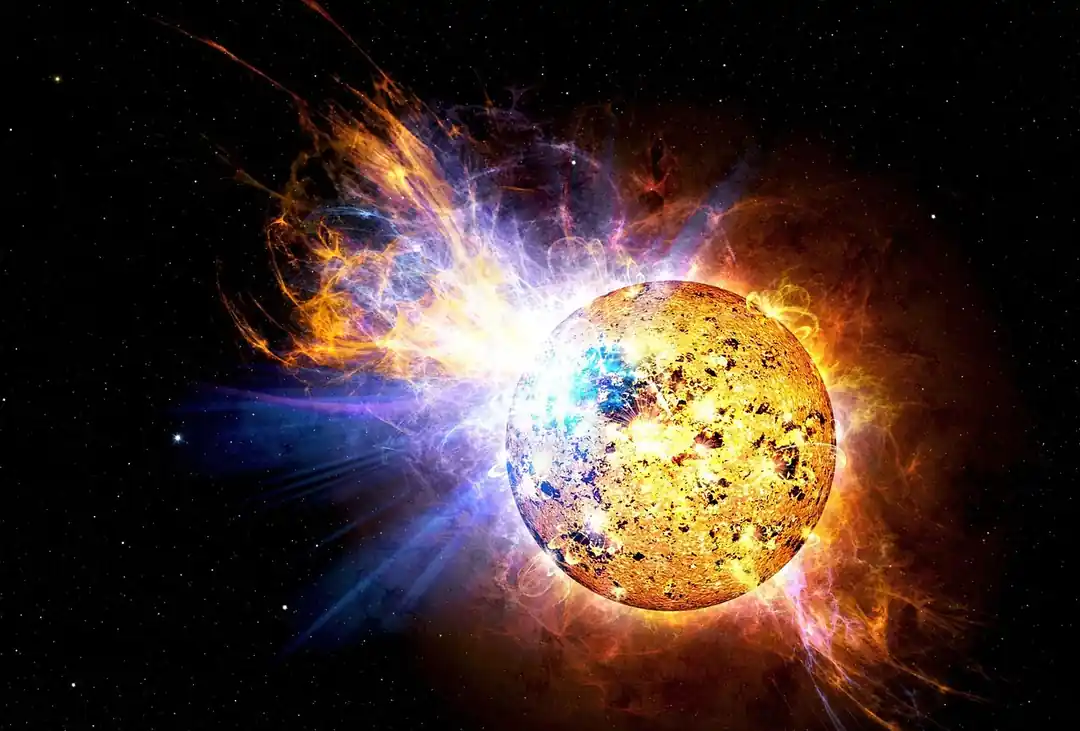
The AI Models Learning to Read the Sun
The key to predicting space weather lies in data—and lots of it. Spacecraft like NASA’s Solar Dynamics Observatory (SDO) have been staring at the sun for years, capturing an uninterrupted stream of high-resolution images. But for humans, trying to analyze this flood of information to find predictive patterns is like trying to find a single specific grain of sand on a beach. This is where AI, and specifically machine learning, shines. By training models on vast historical datasets of solar activity, scientists are teaching them to recognize the subtle magnetic field configurations and plasma movements that act as precursors to a solar flare or CME.
One of the most promising models in this space is called DAGGER (Deep Learning Geomagnetic Perturbation). This model, developed by researchers at the Frontier Development Lab—a partnership that includes NASA, the U.S. Geological Survey, and the Department of Energy—can forecast the impact of a solar storm on specific locations on Earth with remarkable speed and accuracy. Instead of taking hours, it can provide a forecast in seconds. It analyzes real-time data from the sun and the solar wind and predicts where geomagnetic disturbances will occur, giving power grid operators and other authorities precious time to prepare.
Another exciting development is the use of AI to analyze "coronal holes," which are areas on the sun where the solar wind streams out at high speed. These streams can cause geomagnetic storms when they hit Earth. AI models are being trained to identify these holes and predict the speed and density of the solar wind that will eventually reach us, improving the accuracy of 3 to 5-day space weather forecasts. It’s a bit like a meteorologist seeing a hurricane forming over the ocean and being able to predict its path and intensity long before it makes landfall.
Putting AI Predictions into Action
Having a great prediction is one thing; making it useful is another. This is where organizations like NOAA’s Space Weather Prediction Center (SWPC) come in. The SWPC is the official source for space weather forecasts for the United States, and they are increasingly integrating AI-driven tools into their operational workflow. These tools help human forecasters make faster, more informed decisions, improving the reliability of the watches, warnings, and alerts that they issue to industries across the country.
For an airline, an accurate solar radiation storm forecast could mean rerouting polar flights to protect passengers and crew from increased radiation exposure. For a power company, a warning about an impending geomagnetic storm provides time to take transformers offline or reconfigure the grid to prevent catastrophic damage. For satellite operators, it's a chance to put their spacecraft into a protective "safe mode" to weather the storm. AI isn't replacing human experts; it's augmenting their abilities, giving them a powerful new tool to see the future more clearly.
The journey to perfect space weather prediction is far from over. But the fusion of human expertise and artificial intelligence has put us on a path where we are no longer just passive observers of the sun's whims. We are becoming proactive guardians of our technological civilization, learning to read the signs and prepare for the fire. And in a world that runs on technology, that foresight is one of the most valuable resources we could ever have.

Decoding the Cosmos: A Friendly Guide to the NOAA Space Weather Scale
Is the Sun Messing With Your GPS? The Surprising Truth About Geomagnetic Storms
Related Posts
 MOBILE
The Great Console Debate: How to Choose the Right Gaming System for Your Family
Feeling stuck between a Switch, a PlayStation, and an Xbox? Let's break down which gaming console is the perfect fit for your family's game nights.
 MOBILE
From Fragile to Formidable: The Surprising Evolution of Foldable Phone Durability
Remember when the idea of folding a smartphone screen in half felt like a disaster waiting to happen? Let's talk about how far they've come, because the story is pretty incredible.

Popular Posts

Rethinking Non-Profit Promotion: Creative Strategies That Actually Drive Event Impact

Beyond Stark White: The Best Interior Paint Colors to Light Up Your New Space

How to Actually Master a New Language on Your Own (No Magic Gene Required)
