Ever wonder what separates a good forehand from a truly great one? It's all in the fundamentals, and honestly, getting them right feels like unlocking a secret level in your game.
There’s something undeniably satisfying about hitting a clean, powerful forehand in tennis. That feeling when the ball rockets off your strings, sailing over the net with just the right amount of spin and landing precisely where you intended—it’s pure joy, isn't it? For years, I struggled with inconsistency, chasing that elusive perfect shot. I'd hit a few beauties, then spray a dozen wide. It wasn't until I really broke down the core components of the forehand that things started to click. It’s not about brute strength; it’s about a harmonious blend of grip, stance, swing, and follow-through.
I used to think a forehand was just about swinging hard, but boy, was I wrong. It’s a dance, a carefully choreographed sequence that starts long before the ball even reaches you. Understanding these fundamentals isn't just for aspiring pros; it's for anyone who wants to enjoy their time on the court more, feel more confident in their shots, and maybe, just maybe, win a few more points against that one friend who always seems to have your number. Let's peel back the layers and explore what truly makes a forehand sing.
The Foundation: It All Starts with the Grip
The journey to a killer forehand begins, quite literally, in your hand. Your grip dictates everything from the amount of topspin you can generate to the power you can unleash. It’s the connection point, the translator between your intention and the ball's trajectory. I remember a coach once telling me to "shake hands with the racquet," and while that's a good start, there's a bit more nuance to it.
Most coaches will talk about three main forehand grips: Eastern, Semi-Western, and Western. The Eastern grip is often considered the most traditional and is great for hitting flatter, driving shots. It's versatile and comfortable for many beginners. Then there's the Semi-Western, which has become incredibly popular on the pro tours. This grip, where your hand is rotated slightly further under the handle, is a fantastic blend of topspin and power. It's my personal go-to, as it allows you to handle high-bouncing balls with heavy spin while still letting you flatten out the ball for a winner.
Finally, the Western grip is the most extreme of the three and is a topspin-generating machine. If you've ever watched a clay-court specialist, you've seen the kind of heavy, looping balls this grip can produce. However, it can be tougher to handle low balls and requires impeccable timing. There's no single "best" grip—it's about finding what complements your style. My advice? Start with the Semi-Western. It offers the most versatility for the modern game and is a solid base from which you can always adjust.
Setting the Stage: Stance and the Unit Turn
Before you even think about swinging, your feet need to be in the right place. Your stance is your launchpad, providing the balance and power transfer necessary for an effective forehand. It's not just about standing still; it's about dynamic positioning that allows your body to coil and unleash energy. I used to just run to the ball and swing, completely ignoring my feet, and my shots were all arm and no power.
The "unit turn" is the first and most critical move. As soon as you recognize the ball is coming to your forehand side, you turn your shoulders and hips as a single unit, bringing the racquet back with both hands. This coiling action is where your power is born. It stretches the muscles in your core, loading them up like a spring. A common mistake is to just pull the racquet back with your arm, but this leaves all the power generation to your shoulder, which is a recipe for weak shots and potential injury.
From this coiled position, you'll adopt one of a few stances. The neutral stance, where you step toward the net with your opposite foot, is classic for a reason—it allows for a full weight transfer into the shot. However, the modern game is fast, and you won't always have time for that. This is where the open stance comes in. By planting your outside foot and rotating your hips and shoulders, you can hit powerful forehands even when stretched wide. Learning to use both stances interchangeably will make you a much more dynamic and adaptable player.
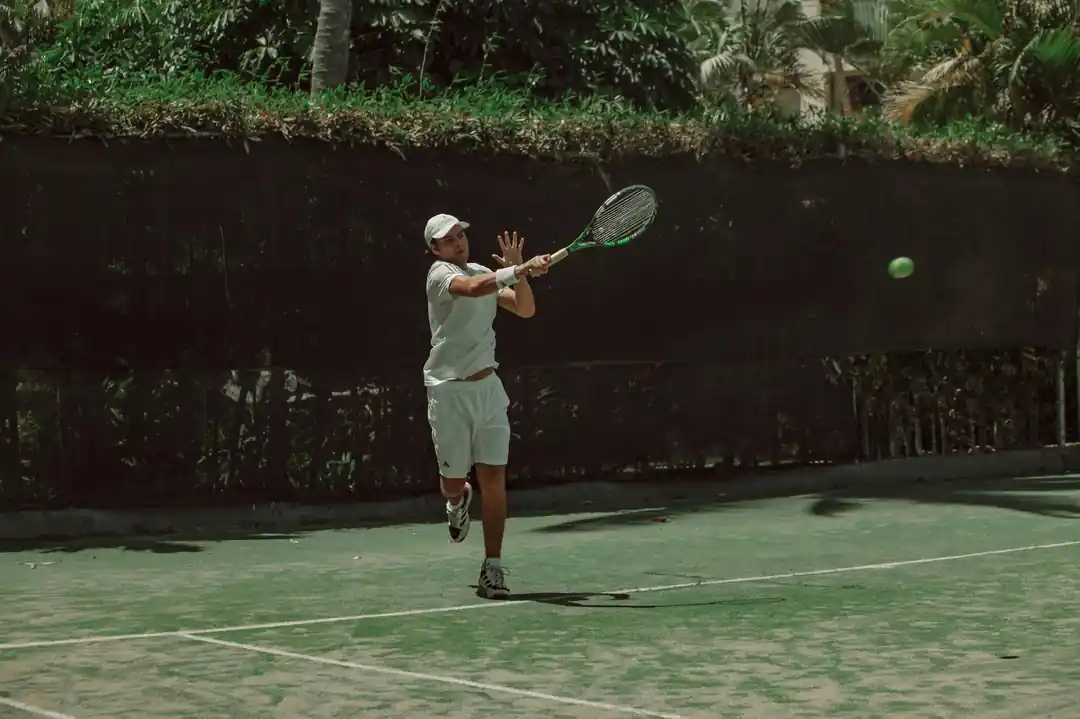
The Heart of the Shot: The Swing Path
Now for the main event: the swing itself. This is where all the preparation comes together, transforming that coiled potential energy into kinetic force. A great forehand swing is fluid and relaxed, not tense and muscled. The shape of the swing is often described as a "C" or a loop. From your unit turn, you'll drop the racquet head below the level of the ball, creating the bottom of the loop. This is a crucial step that many amateurs miss.
Dropping the racquet head allows you to swing up at the ball, which is how you generate topspin. Topspin is what makes the ball dive back down into the court, giving you the margin for error to hit with power and consistency. As you begin your forward swing, your body uncoils in a sequence: hips, torso, then arm. This kinetic chain is the secret to effortless power. It’s not about arming the ball; it’s about letting your body’s rotation do the work.
The contact point should be comfortably out in front of your body. If you let the ball get too close or hit it when it's beside you, you'll be cramped and lose both power and control. As you make contact, you want a firm wrist, but a relaxed arm. Think of your arm as a whip, with the energy transferring all the way to the racquet head at the last moment. It’s a feeling you have to develop, but when you get it right, the ball just explodes off the strings.
The Grand Finale: The Follow-Through
The shot isn't over when the ball leaves your strings. The follow-through is a critical, and often neglected, part of the swing that ensures you've properly decelerated your arm and maximized your racquet-head speed through the contact zone. A common mistake is to stop the swing abruptly after hitting the ball, which is like slamming on the brakes. This not only robs you of power but can also lead to tennis elbow and other injuries.
A good follow-through is a sign that you've committed to the shot and maintained your acceleration through the ball. For a modern topspin forehand, the "windshield wiper" follow-through is a great visual. After contact, the racquet continues to move up and across your body, finishing somewhere over your opposite shoulder. Your elbow should be high and relaxed, and your body should have fully rotated so that your chest faces the net or even slightly past it.
Think of the follow-through as your shot's signature. It's the natural conclusion to a fluid, athletic motion. It provides balance, ensures you've given the ball your full energy, and helps you recover quickly for the next shot. Don't just hit the ball; swing through it. Let your arm finish its natural arc, and you'll find your forehand has more power, more spin, and more reliability.
Mastering the tennis forehand is a journey, not a destination. It requires patience, practice, and a willingness to be mindful of what your body is doing. But trust me, the satisfaction of hitting that perfectly executed forehand, feeling the effortless transfer of energy, is absolutely worth every moment of effort. So next time you step onto the court, be patient with yourself, enjoy the process, and celebrate the feeling of a well-struck ball.
The Real Secret to Insanely Crispy Chicken Nuggets at Home
Don't Get Left in the Cold: Building the Ultimate Winter Car Emergency Kit
Related Posts
 HOBBIES
The Beginner's Guide to Reading the Night Sky: How to Spot Your First Constellations
A friendly, grounded guide to navigating the night sky, understanding stellar movements, and spotting iconic constellations without expensive gear.
 PETS
PETSSniffle-Free Snuggles: America's Most-Loved Hypoallergenic Dogs
Dreaming of a furry friend but dreading the sneezes? You're not alone. Let's dive into the wonderful world of popular hypoallergenic dog breeds in the US.
Popular Posts

Rethinking Non-Profit Promotion: Creative Strategies That Actually Drive Event Impact

Beyond Stark White: The Best Interior Paint Colors to Light Up Your New Space

How to Actually Master a New Language on Your Own (No Magic Gene Required)
