Ever wondered who's been tiptoeing through your backyard? Unravel the mysteries of the wild by learning to read the stories left behind in the snow and mud.
Stepping out into the quiet hush of a world blanketed in fresh snow, or walking the soft, damp edge of a riverbank, have you ever stopped to really look down? There’s a unique kind of magic in that moment of discovery. Those impressions left on the earth aren't just random marks; they are silent stories, whispered accounts of the creatures that passed through, sometimes just moments before you did. For me, learning to read these tracks has transformed a simple walk in the woods into a deep, personal connection with the unseen world around me.
Honestly, I used to be oblivious. I'd see a print and think, "Oh, a dog, maybe?" The world of tracks was a language I didn't speak. But as I started to learn the basics, I realized I was walking through a library every day without ever opening a book. North America is pulsing with incredible wildlife, and their tracks are a vibrant, living script. It’s not just about putting a name to a print; it’s about understanding the rhythm of the wild, the daily commutes, the nightly hunts, and the delicate dance of life that unfolds when we aren't looking.
It’s a skill that pulls you into the present moment, demanding a quiet focus that feels almost meditative. You start to notice the subtle dramas—a fox trail suddenly veering off, the heavy, deliberate prints of a buck, or the playful, bounding marks of a rabbit. This is more than just a hobby; it's a way of seeing the world with new eyes, of feeling truly part of the landscape you inhabit.
Decoding the Clues: What to Look For
Before you can identify a specific animal, you need to become a detective of the details. Think of each print as a collection of clues. The first and most obvious is the shape and size, but the story goes much deeper. Pay close attention to the number of toes. Most of the mammals you'll encounter will have four or five toes on each foot. This simple count is a primary sorting mechanism. For example, all canines (like coyotes and foxes) and felines (like bobcats) have four toes, while raccoons, bears, and opossums have five.
The presence—or absence—of claw marks is another huge giveaway. Canines are like us; their nails are always out. You will almost always see their claw marks in a clear print. Felines, on the other hand, are famously stealthy. They keep their claws retracted to keep them sharp, so you typically won't see any claw marks in their tracks. This single detail is often the easiest way to distinguish a coyote track from a bobcat track of similar size.
Finally, don't just look at one perfect print. Step back and observe the whole trail, the pattern of movement known as the gait. Some animals, like deer and foxes, are "perfect walkers," placing their hind foot directly into the print of their front foot to conserve energy and move quietly. This creates a neat, narrow, almost straight line of tracks. Others, like rabbits and squirrels, are "bounders," leaping with their hind feet landing ahead of their front feet. Understanding these patterns of movement can often tell you more than a single, isolated footprint ever could.
A Starter Guide to Common North American Tracks
Let's get familiar with some of the most common storytellers you'll find in the fields and forests of North America. Mastering these will build your confidence and give you a solid foundation for identifying more elusive creatures.
The Heart-Shaped Hoof: Deer
For many, the split-hoof print of a deer is the quintessential animal track. It's elegant, distinctive, and thankfully, quite common. The track is composed of two curved halves that come to a point, creating a shape often described as a heart. A typical white-tailed deer track is about 2 to 3 inches long. In soft mud or deep snow, you might also see two smaller dots behind the main hoof print; these are the dewclaws, which provide extra traction. As "perfect walkers," deer often leave a surprisingly neat and narrow trail, a testament to their graceful and efficient movement through the landscape.
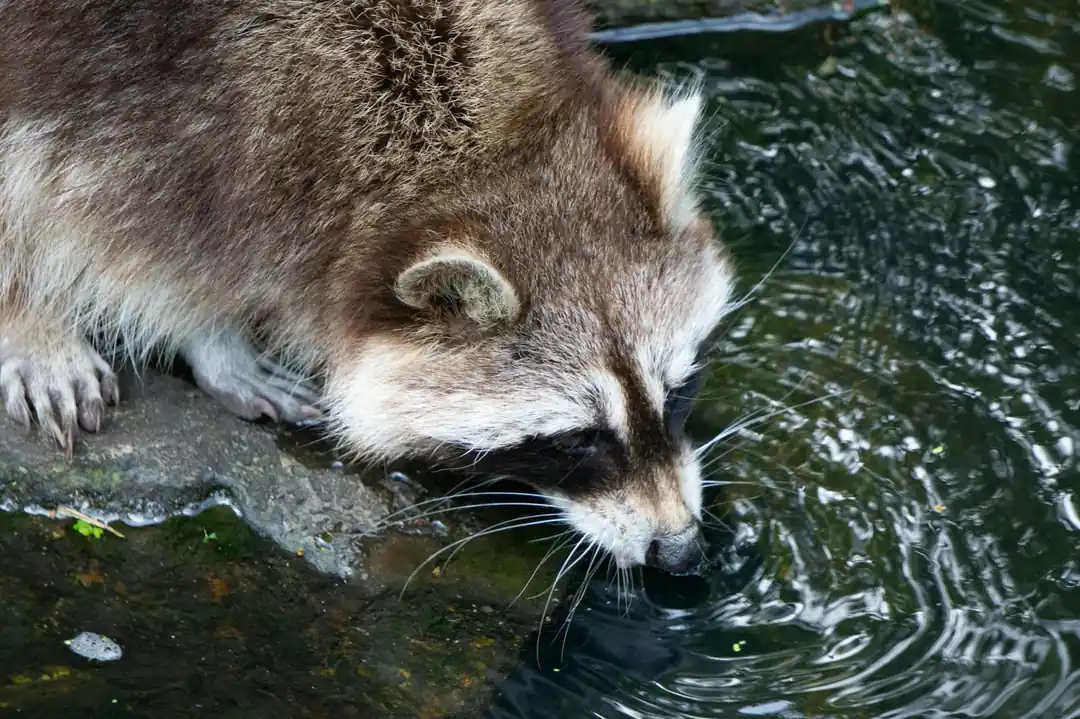
The Clever Hand: Raccoon
Raccoon tracks are one of a kind and an absolute delight to find. They look remarkably like tiny human handprints, with five long, slender toes splayed out. You'll notice a distinct difference between the front and hind paws. The front paw is smaller and wider, while the larger hind paw is longer and more heel-heavy, providing stability. Because of their waddling gait, you'll often find their tracks paired up, with a front and hind print landing close together. These prints are most commonly found along the muddy banks of streams, ponds, and rivers, a clear sign of their nightly foraging for food.
The Purposeful Canine: Coyote
Coyote tracks can be tricky, as they are easily confused with those of a medium-sized domestic dog. However, there are subtle but consistent differences. A coyote's track is generally more oval and compact than a dog's, with the toes held more closely together. You will see four toes and clear claw marks. The most telling clue, however, is the trail pattern. A coyote on the move is all business, walking in a remarkably straight and purposeful line. A domestic dog, by contrast, tends to wander, sniff, and zigzag. Seeing that direct, efficient trail is often the best confirmation that you're looking at the path of a wild canine.
The Bounding Pattern: Rabbit
Rabbit tracks are perhaps most iconic in the snow, where their unique bounding pattern is laid out in perfect clarity. When a rabbit moves, its larger hind feet land ahead of its smaller front feet. This creates a distinctive group of four prints: two large, side-by-side prints (the hind feet) followed by two smaller, often staggered prints behind them (the front feet). The entire group points in the direction of travel. Squirrels also bound, but their tracks tend to be more square-shaped, with four toes clearly visible, whereas a rabbit's furry feet often obscure the details, leaving a more indistinct impression.
A Lifelong Journey of Observation
Becoming a tracker is not about instant expertise; it's about cultivating patience and a deep sense of curiosity. The best way to learn is to simply get outside, in all seasons, and start looking down. Carry a small ruler or use a coin for scale in photos, and consider keeping a small journal to sketch what you find. Note the size, shape, number of toes, and the gait. Over time, you'll build a personal library of experiences that no book can replace.
This practice is a powerful way to reconnect with the world on a more intimate level. It quiets the mind and sharpens the senses. It reminds us that we are part of a much larger, more complex community of beings, each leaving its own subtle signature on the land. So the next time you find yourself on a trail, take a moment. The ground beneath your feet is telling a story, and now, you just might be able to read it.
Creating a Backyard Haven: How to Wildlife-Proof Your Yard Without Harming Animals
Where the Wild Things Are: A Guide to America's Best National Parks for Wildlife
Related Posts
 HOBBIES
The Beginner's Guide to Reading the Night Sky: How to Spot Your First Constellations
A friendly, grounded guide to navigating the night sky, understanding stellar movements, and spotting iconic constellations without expensive gear.
 PETS
PETSSniffle-Free Snuggles: America's Most-Loved Hypoallergenic Dogs
Dreaming of a furry friend but dreading the sneezes? You're not alone. Let's dive into the wonderful world of popular hypoallergenic dog breeds in the US.

Popular Posts

Rethinking Non-Profit Promotion: Creative Strategies That Actually Drive Event Impact

Beyond Stark White: The Best Interior Paint Colors to Light Up Your New Space

How to Actually Master a New Language on Your Own (No Magic Gene Required)
