Ever wonder how you can get high-speed internet in the middle of nowhere? It's not magic, it's a cosmic ballet of data. Let's break down how satellite internet actually works.
There’s a certain peace that comes with rural living that you just can't find in the city. The quiet mornings, the endless night sky, the feeling of having space to breathe. For years, though, that peace came with a frustrating trade-off: a deep, digital silence. While friends in town were streaming movies and video-chatting effortlessly, many of us in the countryside were stuck in the digital dark ages. The so-called "digital divide" wasn't just a concept; it was a daily reality of slow, unreliable connections, if any were available at all.
Honestly, I used to think that fast, reliable internet was a luxury reserved for those living within city limits. The cost of laying miles of fiber optic cable to serve a handful of homes just didn't add up for the big providers. But the solution wasn't under our feet; it was orbiting high above our heads. Satellite internet, once seen as a clunky, expensive last resort, has undergone a quiet revolution. It's become a powerful force, bridging that divide and bringing the digital world to the most remote doorsteps.
From Space to Your Screen: The Journey of a Single Click
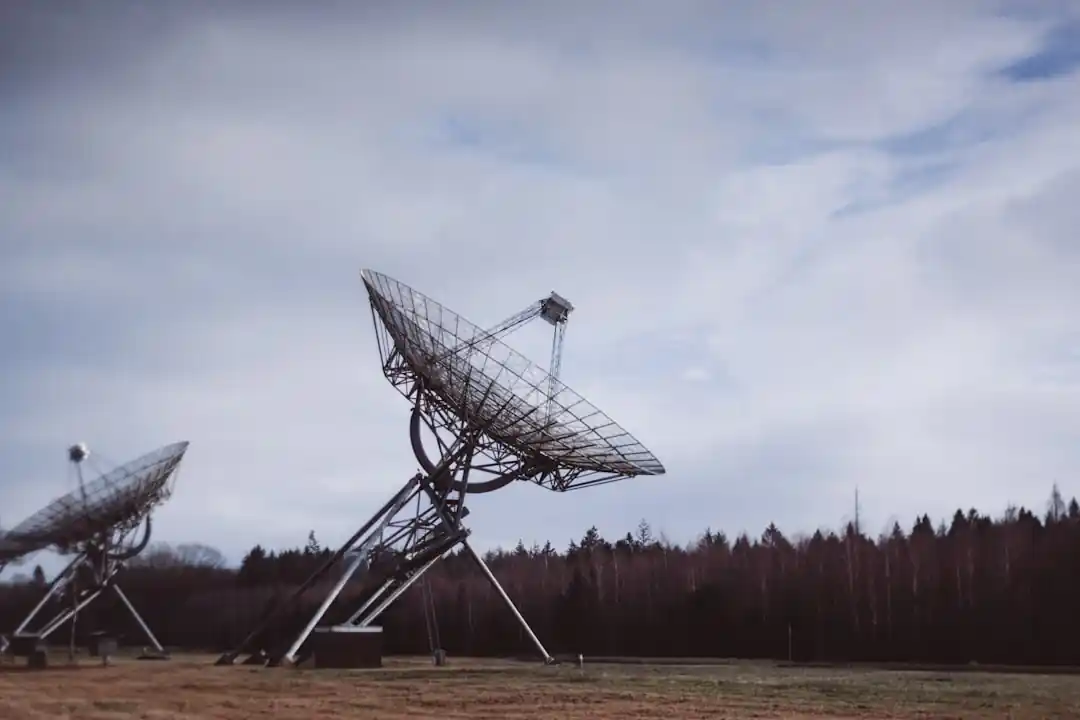
So, how does this magic actually happen? It sounds like science fiction, but the concept is surprisingly straightforward. It’s a three-part relay race. First, there's your satellite dish at home, professionally installed on your roof or in a spot with a clear view of the sky. Second, there's a satellite in space. And third, there's a ground station back on Earth, which is wired into the massive, physical network of the internet.
When you click a link to watch a video, your computer sends a request to your modem, which then sends it to your satellite dish. The dish beams that request up to the satellite orbiting thousands of miles above. The satellite then relays this signal down to the ground station. The ground station fetches the video from the internet's servers and sends it back up to the satellite, which then beams it down to your dish, and finally, to your screen. This entire round trip happens in a fraction of a second. It’s a cosmic journey for your data, traveling a vast distance to bring the world to you.
The real game-changer in recent years has been the type of satellite used. For a long time, providers used geostationary (GEO) satellites, which orbit about 22,000 miles up. The huge distance created a noticeable delay, or "latency," which made real-time activities like gaming or video calls feel sluggish. Now, new players like Starlink are using Low Earth Orbit (LEO) satellites, which are much closer—only a few hundred miles up. This drastically cuts down the travel time for the signal, making the internet feel incredibly responsive and fast, much like a fiber connection.
The Good, The Bad, and The Weather
Let's be real, no technology is perfect, and satellite internet has its own set of pros and cons. The most significant advantage, without a doubt, is availability. It can deliver broadband to places where cable and fiber simply will not go. If you have a clear view of the sky, you can likely get a connection. For millions of Americans in rural areas, this is a life-changing proposition, opening doors to remote work, online education, and telehealth services that were previously impossible.
However, there are challenges. As mentioned, latency can be an issue, particularly with older GEO satellite systems. That delay can be a deal-breaker for serious online gamers or those who rely on split-second financial trading. Another factor is the weather. Just as a heavy storm can interfere with satellite TV, a downpour or heavy snow can sometimes disrupt your internet signal, a phenomenon known as "rain fade." Modern systems are much better at handling this, but it's still a possibility.
Finally, there's the matter of data caps. Many satellite internet plans come with a certain amount of high-speed data per month. Once you use it up, your speeds might be slowed down significantly for the rest of the billing cycle. This requires a bit more mindfulness about your data consumption, especially if you're a heavy streamer or have a household full of connected devices. It's a different way of thinking about internet usage compared to the "all-you-can-eat" plans common with terrestrial broadband.
A Connected Future for the Countryside
The landscape of satellite internet is changing at a breathtaking pace. The competition between major providers like Viasat, HughesNet, and the aggressive newcomer Starlink is driving innovation, leading to faster speeds, lower latency, and more consumer-friendly plans. The expansion of LEO satellite constellations is not just an incremental improvement; it's a fundamental shift that is making satellite a true competitor to ground-based internet.
This technology is doing more than just letting people watch Netflix in the woods. It's empowering rural economies, allowing small businesses to compete on a global scale, and giving children access to the same educational resources as their urban peers. It's connecting families, enabling grandparents to video chat with their grandkids from the comfort of their remote farmhouse. It’s a powerful tool for leveling the playing field.
Living a rural life no longer has to mean living a disconnected one. That small dish on the roof is a symbol of progress, a quiet promise that no matter where you choose to call home, you are part of the global conversation. And as this technology continues to improve, the future for rural America looks brighter and more connected than ever.

Ditch the Dinner Date: Creative First Date Ideas That Are Actually Fun
Your Guide to Starting a Home Fitness Routine You'll Actually Stick With

Related Posts
 MOBILE
The Great Console Debate: How to Choose the Right Gaming System for Your Family
Feeling stuck between a Switch, a PlayStation, and an Xbox? Let's break down which gaming console is the perfect fit for your family's game nights.
 MOBILE
From Fragile to Formidable: The Surprising Evolution of Foldable Phone Durability
Remember when the idea of folding a smartphone screen in half felt like a disaster waiting to happen? Let's talk about how far they've come, because the story is pretty incredible.
Popular Posts

Rethinking Non-Profit Promotion: Creative Strategies That Actually Drive Event Impact

Beyond Stark White: The Best Interior Paint Colors to Light Up Your New Space

How to Actually Master a New Language on Your Own (No Magic Gene Required)
