Ever wonder where your coffee beans *really* come from? Blockchain is pulling back the curtain on complex supply chains, offering a new level of trust and transparency we've never seen before.
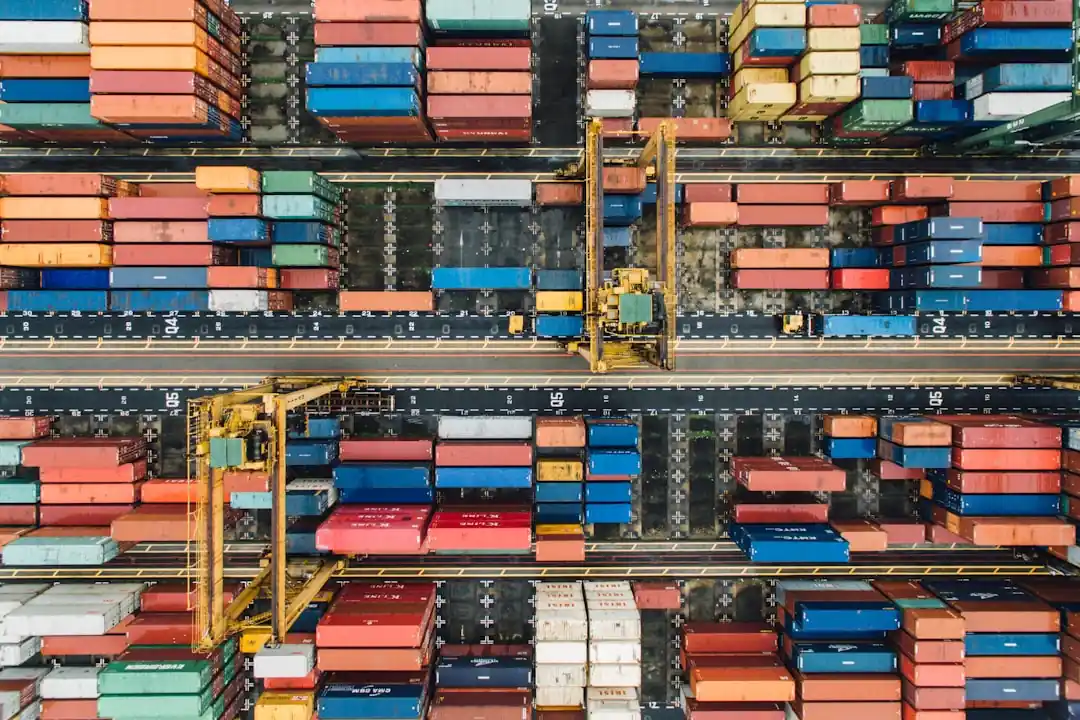
Have you ever stood in a grocery store, holding a piece of fruit, and wondered about its story? Where was it grown? Who picked it? How many miles did it travel to get to your hand? For most of us, the journey of our products is a complete mystery. The modern supply chain is a sprawling, incredibly complex network that involves dozens of stages and stakeholders, from farmers and manufacturers to shippers and retailers. This complexity has historically created a fog of opacity, making it difficult to trace a product's origins, verify its authenticity, or ensure it was sourced ethically.
Honestly, when I first heard "blockchain," my mind, like many others, immediately jumped to Bitcoin and the volatile world of cryptocurrency. It seemed like a niche, highly technical concept reserved for finance gurus and tech evangelists. But the more I looked into it, the more I realized I was only seeing the tip of the iceberg. The underlying technology of blockchain—a decentralized, immutable digital ledger—has profound implications that stretch far beyond digital money. It’s poised to fundamentally reshape industries by introducing a radical level of transparency, and nowhere is that potential more transformative than in the global supply chain.
What's Broken in Our Current Supply Chains?
Before we dive into the solution, it’s worth taking a moment to appreciate the problem. Traditional supply chains are often a tangled mess of information silos. Each participant—the supplier, the manufacturer, the distributor, the retailer—maintains their own separate records. This fragmentation makes it incredibly difficult to get a single, unified view of a product's journey. Information is passed along from one party to the next, often through a mix of paper trails, emails, and disparate digital systems that don’t talk to each other.
This lack of a "single source of truth" is the root cause of so many issues. It allows for counterfeit goods to enter the market, as their origins can be easily falsified. It makes food recalls a slow and agonizingly broad process, as pinpointing the exact source of contamination can take days or even weeks. It also enables unethical practices, like forced labor or unsustainable sourcing, to hide in the shadows of the supply chain's complexity. Consumers are increasingly demanding to know more about the products they buy, and the old way of doing things just doesn't build the trust that's needed.
Enter Blockchain: A Shared, Unbreakable Story
So, how does blockchain fix this? In the simplest terms, you can think of a blockchain as a shared digital notebook that is duplicated and spread across a network of computers. When a new entry, or "block," is added to the notebook (representing a transaction or event, like a shipment leaving a factory), it is linked to the previous block, forming a "chain." Each new block cryptographically secures the one before it, and because the notebook is distributed across many computers, it's virtually impossible for anyone to go back and alter an entry without everyone else in the network knowing.
This is the magic of immutability and decentralization. Instead of each company keeping its own private ledger, all permitted participants in the supply chain share the same ledger. When a product moves from the farm to the processing plant, that event is recorded as a block. When it's loaded onto a truck, that's another block. When it arrives at the warehouse, another block. Each step of the journey is recorded in real-time, creating a permanent, transparent, and unforgeable history of the product from origin to final sale.
The Real-World Impact: It's Already Happening
This isn't just a futuristic concept; it's being put into practice today by some of the world's biggest companies. One of the most cited examples is Walmart. The retail giant has used blockchain to enhance food safety. In the past, tracing the source of a contaminated food item could take nearly a week. With their blockchain-powered system, they can now do it in about 2.2 seconds. This incredible speed means they can quickly isolate affected products, protect consumers, and prevent massive, costly recalls of perfectly good food.
The impact is also being felt in the fight against counterfeit goods. The pharmaceutical industry, for instance, is exploring blockchain to track drugs from the manufacturing plant to the pharmacy, ensuring that patients receive authentic, safe medications. In the world of luxury goods, companies like De Beers have used blockchain to track diamonds, providing customers with an immutable certificate of origin and assurance that their purchase is conflict-free. These applications demonstrate a powerful shift towards accountability and consumer empowerment.
The Road Ahead: Challenges and a Brighter Future
Of course, the path to widespread adoption isn't without its bumps. Integrating blockchain technology with existing legacy systems can be complex and costly. There are also challenges around scalability—ensuring the network can handle a massive volume of transactions—and interoperability, which is getting different blockchain systems to communicate with each other. Furthermore, it requires a significant degree of collaboration among all parties in a supply chain, who must agree on standards for data sharing.
Despite these hurdles, the momentum is undeniable. The demand for transparency, from both consumers and regulators, is only growing stronger. Blockchain provides a robust and elegant technological framework to meet that demand. It fosters a new ecosystem of trust where every product has a verifiable story. As this technology continues to mature and become more accessible, we can look forward to a world where the journey of our goods is no longer a mystery, but an open book that we can all read and trust.
Beyond the Clock Tower: Czechia's Most Magical Historical Sites
Is Your Small Business Crypto-Ready? A Guide to Accepting Digital Payments
Related Posts
 BUSINESS
Rethinking Non-Profit Promotion: Creative Strategies That Actually Drive Event Impact
Discover modern, research-backed strategies for promoting non-profit fundraisers, from experiential marketing to hyper-local micro-influencers and cross-sector partnerships.
 BUSINESS
Is the TV Ad Dead? A Deep Dive into Cost and Effectiveness in 2024
In an age of streaming and scrolling, is a TV commercial still a smart bet for brands? We're breaking down the real costs and surprising effectiveness of television advertising today.

Popular Posts
Rethinking Non-Profit Promotion: Creative Strategies That Actually Drive Event Impact

Beyond Stark White: The Best Interior Paint Colors to Light Up Your New Space

How to Actually Master a New Language on Your Own (No Magic Gene Required)
