Feeling a little lost on the court? Don't sweat it. We're breaking down the essential, non-negotiable skills every beginner needs to build a solid foundation in basketball.
I remember the first time I tried to play a real game of pickup basketball. I had all this energy, this picture in my head of weaving through defenders and sinking a perfect shot. The reality? I could barely dribble without staring at my feet, my passes were clumsy, and my shots... well, let's just say they were a danger to anyone standing near the backboard. It's a humbling experience, but it's one that every single person who has ever picked up a basketball has gone through. The journey from feeling awkward and out of place to moving with confidence on the court is paved with practice, and it all starts with the fundamentals.
It’s so easy to get caught up in the highlight reels—the flashy dunks, the impossible three-pointers. But what you don't see is the thousands of hours those players spent on the basics. They weren't born with a perfect jump shot; they built it. They mastered the simple, almost boring, drills until they became second nature. Thinking about it that way completely changed my approach. I realized that trying to skip the fundamentals is like trying to build a house without a foundation. It might look okay for a minute, but it's going to crumble under the slightest pressure.
So, if you're just starting out, the best advice anyone can give you is to fall in love with the process. Embrace the repetition. Find the small joys in a crisp pass or a dribble you didn't have to look at. These core skills are your ticket to not just playing the game, but truly understanding and enjoying it.
Dribbling: The Heartbeat of the Game
Before you can shoot, pass, or score, you have to be able to move with the ball. Dribbling is the engine of basketball. Without it, you're stuck. A good handle allows you to control the tempo, escape pressure, and create opportunities for your entire team. Honestly, watching someone with a great dribble is like watching a dancer; there's a rhythm and flow to it that's mesmerizing. But that flow comes from one thing: muscle memory.
The first step is getting comfortable with the ball. You don't want to slap at it with your palm; you want to control it with your fingertips. A great at-home drill is to just sit and dribble the ball while you're watching TV. Dribble low, dribble high, switch hands. Get a feel for how the ball responds to the pressure from your fingers. The goal is to get to a point where you don't have to think about the dribble anymore. It should be as natural as walking.
And that brings up the golden rule of dribbling: keep your head up. It’s the most common mistake beginners make, and it’s a total game-killer. If your eyes are on the ball, you can't see the defender in front of you, the teammate cutting to the basket, or the open lane to your right. It feels unnatural at first, but forcing yourself to dribble with your eyes forward is non-negotiable. It’s what separates someone who can bounce a ball from a true ball-handler.
Shooting: The Art of the Arc
Let's be real, this is the skill everyone wants to master. The satisfying swish of the net is one of the best sounds in sports. But chasing that sound without proper form leads to nothing but frustration. I've seen it a hundred times—beginners trying to launch the ball with all their might, using their chest and arms, and wondering why their shots are so inconsistent. The secret to a good shot isn't strength; it's technique.
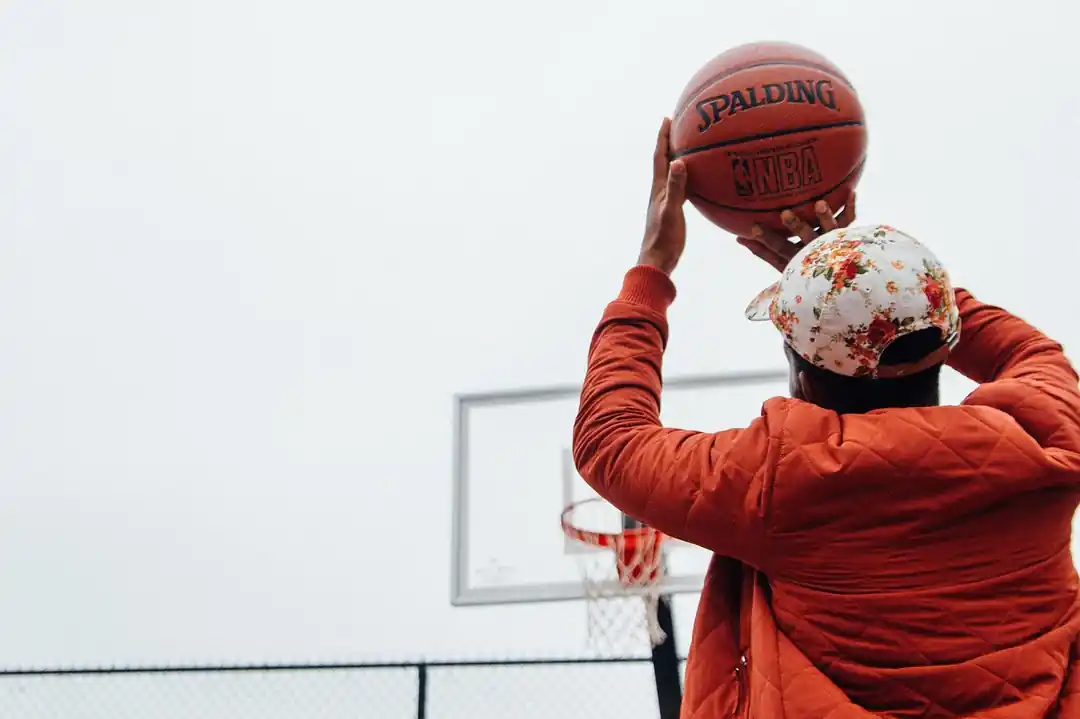
Coaches often use the acronym B.E.E.F. to teach shooting, and it's a fantastic starting point. It stands for Balance, Eyes, Elbow, Follow-through. Your Balance should be solid, with your feet about shoulder-width apart and your knees slightly bent. Your Eyes should be locked on your target—the rim. Don't watch the ball's flight; trust your mechanics. Your shooting Elbow should be tucked in, forming a straight line under the ball. A "chicken wing" elbow that sticks out is a primary cause of missed shots to the left or right. Finally, the Follow-through is crucial. After you release the ball, keep your arm extended and "snap" your wrist as if you're reaching into a cookie jar on a high shelf.
Start close. Seriously, stand a foot away from the basket and just practice your form. No jumping, just focus on the B.E.E.F. principle and the smooth release. As you get more comfortable and consistent, take a step back. Then another. Building your shot from the inside out ensures that your mechanics are sound, so when you do start adding distance and pressure, your form will hold up.
Passing: The Language of Teamwork
A great pass is just as beautiful as a great shot. Basketball is a team game, and passing is how you connect the five players on the court into a single, cohesive unit. A team that can't pass effectively will stagnate, leading to forced shots and turnovers. A team with skilled passers, however, can move the ball with purpose, break down a defense, and create easy scoring opportunities.
There are three basic passes every beginner should master. The Chest Pass is your go-to. It's a quick, direct pass from your chest to your teammate's chest, thrown with two hands. The Bounce Pass is used to get the ball around a defender. You want the ball to bounce about two-thirds of the way to your teammate, coming up to their waist level. Finally, the Overhead Pass is used to throw the ball over a defender or for a longer-distance pass down the court.
The key to all passing is to be crisp and decisive. A slow, looping pass is an open invitation for a defender to steal it. Step into your pass to generate power, and snap the ball to your target. And just like with dribbling, communication is key. Make eye contact with your teammate before you throw the ball. Sometimes a simple head nod is all it takes to confirm you're on the same page.
Defense and Footwork: The Unsung Heroes
Offense sells tickets, but defense wins championships. It's an old cliché, but it's absolutely true. Being a good defender is about more than just trying to block shots; it's about effort, intelligence, and most importantly, footwork. All the offensive skills in the world don't mean much if you can't stop the other team from scoring.
It all starts with the defensive stance. You need to be low to the ground, with your knees bent, your back straight, and your arms out wide to disrupt passing lanes. You should feel active and ready to move, like a coiled spring. From this stance, you use short, choppy "defensive slides" to stay in front of your opponent. The goal is to move your feet to beat them to a spot, not to reach with your hands, which can lead to fouls.
This is where footwork becomes so critical. Drills like jumping rope, agility ladders, and defensive slides will improve your quickness and balance. This doesn't just help on defense; it translates to every aspect of the game. Better footwork helps you get open for a shot, drive past a defender, and get in position for a rebound. It's the foundational skill that lifts up all the others.
The journey of a basketball player is a long one, and there's always something new to learn. But by building a strong base with these fundamental skills, you're setting yourself up for success and, more importantly, for a lifelong enjoyment of the game. So grab a ball, find a court, and start building. The rest will come.
Forget the Rulebook: How to Teach Kids the Joy of Soccer
How to Throw an Epic Themed Party Without Breaking the Bank
Related Posts
 HOBBIES
The Beginner's Guide to Reading the Night Sky: How to Spot Your First Constellations
A friendly, grounded guide to navigating the night sky, understanding stellar movements, and spotting iconic constellations without expensive gear.
 PETS
PETSSniffle-Free Snuggles: America's Most-Loved Hypoallergenic Dogs
Dreaming of a furry friend but dreading the sneezes? You're not alone. Let's dive into the wonderful world of popular hypoallergenic dog breeds in the US.

Popular Posts

Rethinking Non-Profit Promotion: Creative Strategies That Actually Drive Event Impact

Beyond Stark White: The Best Interior Paint Colors to Light Up Your New Space

How to Actually Master a New Language on Your Own (No Magic Gene Required)
