Thinking about trying alpine skiing? It can feel intimidating, but with a few basic techniques, you'll go from nervous to confident. Let's walk through it together.
There’s a certain magic to the mountains in winter, a quiet allure that pulls you in. You see skiers gliding down slopes, carving graceful turns against a backdrop of snow-dusted pines, and a little voice inside whispers, "I want to do that." But for most of us, that whisper is quickly followed by a much louder voice of doubt. It looks cold, expensive, and, let's be honest, incredibly intimidating. I get it. My first time standing at the top of even the gentlest slope, I was convinced I'd made a huge mistake.
The truth is, every single one of those expert skiers had a Day One. A day of fumbling with boots that feel like they're from a sci-fi movie, of skis that seem to have a mind of their own, and of spending a surprising amount of time acquainted with the snow. The journey from nervous novice to confident skier isn't about being a natural-born athlete; it's about embracing the learning process and mastering a few simple, foundational skills. It’s about giving yourself permission to be a beginner.
This guide is for anyone who has ever felt that pull to the mountains but was held back by uncertainty. We're going to break down the absolute basics, the core techniques that will take you from feeling wobbly and overwhelmed to feeling a sense of control and, eventually, pure joy. Forget the X-Games for now. Our goal is much simpler and, honestly, far more rewarding: to make it down the bunny hill with a smile on your face.
Before You Even Touch the Snow
One of the biggest hurdles for new skiers happens before you even see the chairlift: the gear. Specifically, the boots. Ski boots are notoriously rigid and awkward, and your first time putting them on can be a humbling experience. They are designed to be snug to transfer the smallest movements from your legs to your skis, so don't be surprised if they feel incredibly tight. My advice? Wear thin, tall socks (not thick cotton ones, which bunch up and hold moisture) and make sure you can wiggle your toes but that your heel stays locked in place when you lean forward.
Once you're booted up, take some time to just walk around on a flat, non-snowy surface. It’s going to feel strange, like you're walking in concrete shoes, but it helps you find your center of balance. Practice flexing forward at the ankles, feeling your shins press into the tongue of the boots. This is the fundamental "athletic stance" of skiing, and getting used to it on solid ground makes it feel less alien when you're on the slippery stuff.
This is also the perfect time to get acquainted with your skis. A good rental shop will set the bindings to release safely based on your height, weight, and ability level. Learn how to click your boots into the bindings (toe first, then stomp the heel down) and how to release them (usually by pressing down on the lever at the back with a ski pole). Doing this a few times on the flat ground demystifies the equipment and builds a little muscle memory, so you're not fumbling with it on a slope later.
Your First Friends: The Wedge and The Glide
Now for the moment of truth. You're on the snow, skis on, and you're probably thinking, "Okay, what now?" Your first goal isn't to schuss down the mountain; it's simply to control your speed. To do that, you need to learn the most important shape in beginner skiing: the wedge. You might know it by its more common name, the "pizza." This single technique is your brake, your steering wheel, and your security blanket all in one.
To make a wedge, you keep the tips of your skis relatively close together while pushing your heels out, forming a V-shape. The wider you make that V, the more snow you push and the slower you go. A narrow wedge lets you glide a bit faster. It’s an incredibly intuitive system of control. On a very gentle, almost flat area (the "bunny hill"), just let yourself start to slide forward in a straight line and then practice widening your wedge to slow down and come to a stop. Feel the friction of your inside edges against the snow. That feeling is control.
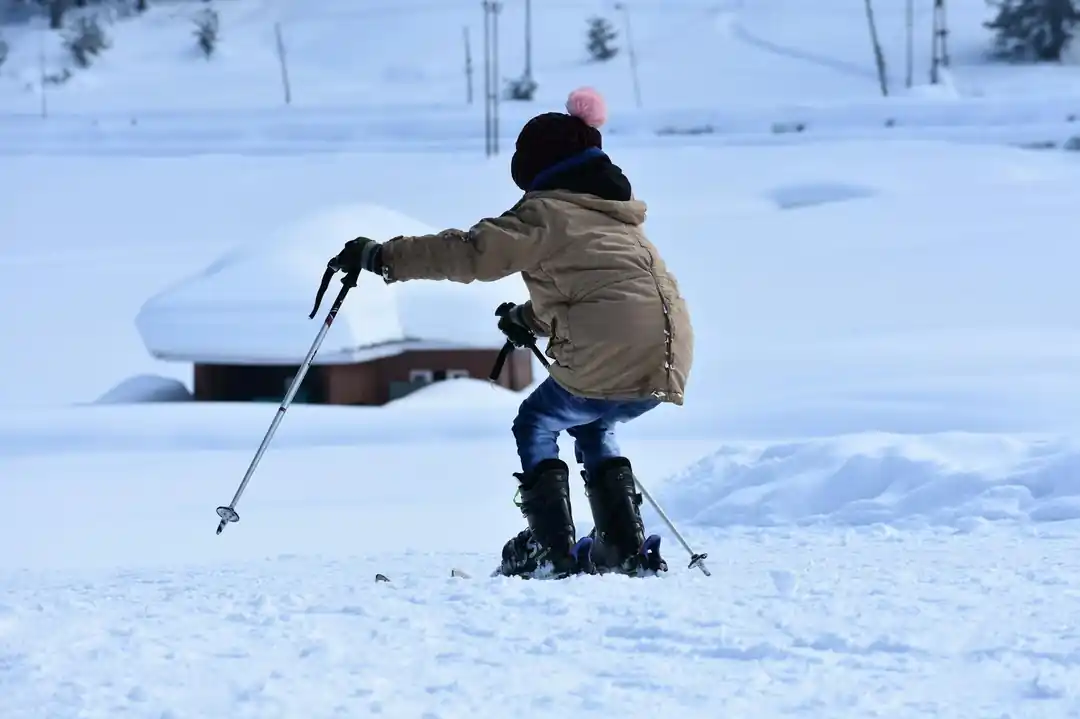
Don't worry about turning yet. Just glide and stop. Glide for five feet, then make a big wedge to stop. Glide for ten feet, then stop again. It’s all about building confidence and proving to your brain that you are, in fact, in charge. You'll quickly realize that you have a reliable way to manage your speed, and that knowledge is what unlocks the freedom to try the next step.
The Art of the Turn (and the Fall)
Once you're comfortable with gliding and stopping, it's time to learn how to change direction. This is where the magic really starts to happen. The good news is that you'll use the same wedge shape you've been practicing. A wedge turn is all about shifting your weight and letting the skis do the work.
While gliding in your wedge, simply put a little more pressure on your left ski. You can think of it as pressing down on your left big toe or slightly turning your body to face the right. You'll feel the skis start to arc gently to the right. To turn left, you do the opposite: apply a bit more pressure to your right ski. It’s a subtle movement, not a sudden jerk. Look where you want to go—your body will naturally follow your gaze. Linking these gentle turns from one side to the other is the goal, creating a nice 'S' pattern down the slope.
Now, let's talk about something just as important as turning: falling. You are going to fall. Everyone falls. Falling is not a failure; it's a part of the process. The trick is to learn how to fall safely. If you feel like you're losing control, don't fight it. Just try to "sit down" into the snow, aiming for your hip and side. Avoid falling forward or trying to catch yourself with your hands, as this is how injuries can happen.
Getting back up is its own unique skill. It can be awkward, but here's the method: swing your skis so they are across the slope (horizontal), not pointing downhill. Bring your skis up close to your body, plant your uphill hand on the snow for support, and use your other hand to push off your knee to stand up. It might take a few tries, but you'll get it. Embracing the fall and learning to get up efficiently removes a huge amount of fear from the equation.
With these fundamentals—the stance, the wedge, the turn, and the art of a good fall—you have everything you need for a fantastic first day on the snow. It won't always be graceful, but it will be progress. And as you stand at the bottom of the hill after linking a few successful turns, you'll feel a sense of accomplishment that is absolutely worth the effort. The mountains are waiting, and now, you have the tools to answer their call.

From Blank Page to Power Ballad: How to Write Lyrics That Truly Connect
More Than a Game: The Subtle Rule Differences That Define Women's Basketball

Related Posts
 HOBBIES
The Beginner's Guide to Reading the Night Sky: How to Spot Your First Constellations
A friendly, grounded guide to navigating the night sky, understanding stellar movements, and spotting iconic constellations without expensive gear.
 PETS
PETSSniffle-Free Snuggles: America's Most-Loved Hypoallergenic Dogs
Dreaming of a furry friend but dreading the sneezes? You're not alone. Let's dive into the wonderful world of popular hypoallergenic dog breeds in the US.
Popular Posts

Rethinking Non-Profit Promotion: Creative Strategies That Actually Drive Event Impact

Beyond Stark White: The Best Interior Paint Colors to Light Up Your New Space

How to Actually Master a New Language on Your Own (No Magic Gene Required)
